
Power bills can feel like they’ve got a mind of their own. But here’s the good news: modern electrical technology is getting genuinely clever at helping Aussie homes use less energy, waste less electricity, and shift usage to cheaper, and often cleaner, times of day.
If you’re in Ballarat, you’ll know our winters can be properly chilly, and heating can be a big part of household energy use. In fact, heating and cooling are typically the biggest slice of home energy use, so smarter control here can make a noticeable difference.
This article walks through the upgrades and tech that are making a real difference right now, without turning your place into a sci-fi control room.
The big shift: from “using power” to “managing power”
For decades, most homes worked like this: you turned things on, they ran when they ran, and your bill arrived as a surprise at the end of the quarter.
Modern homes are shifting to something smarter:
- Measure what’s happening, so you can spot waste
- Control the big energy users like heating, hot water, and EV charging
- Automate the timing, so the house does the smart stuff for you
That’s what modern electrical tech is really about, not adding gadgets for the sake of it, but using better data and better control to stop energy leaking out of your home and your budget.
Smart meters
If you’re in Victoria, you’re already ahead of the pack. Victoria leads Australia with approximately 99% of meters read remotely, which is a significant enabler for smarter tariffs and more effective energy programs.
Why smart meters matter
A smart meter makes it easier to identify when you use the most electricity and choose pricing plans that align with your lifestyle. They also support solar, batteries, EV charging and new energy services.
Australia’s energy market bodies have been pushing for a faster smart meter rollout nationally, with rules and timelines aimed at replacing older “legacy” meters and accelerating deployment through to 2030.
Timing your energy use
Once you can see your usage patterns, it’s much easier to shift the “heavy hitters” to cheaper windows; think dishwashers, laundry, hot water heating, and EV charging.
And if you’re on, or considering, a time-of-use style plan, government info explains the basics: peak periods cost more, off-peak costs less.
Smart homes that actually save energy
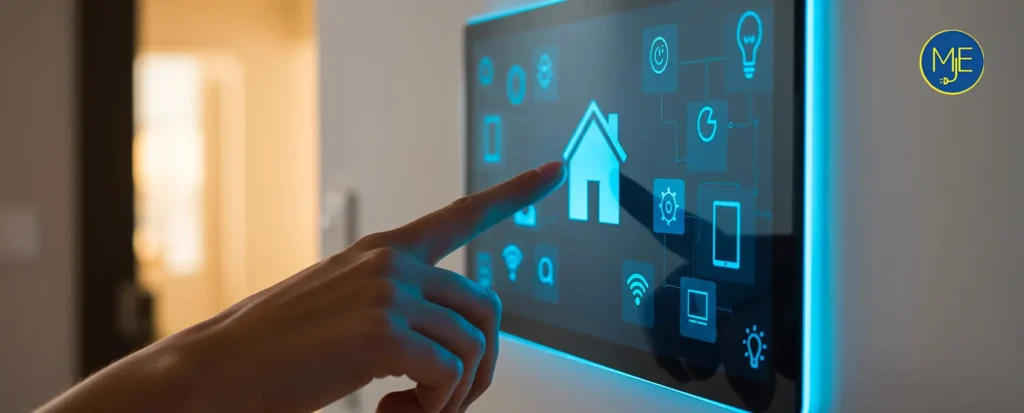
A smart home isn’t just voice control and fancy lights. Smart homes can automate equipment to turn on/off, run on schedules, or adjust to conditions, helping save energy and money.
A really good rule of thumb: Use “smart” to control big loads and reduce wasted runtime, not to add more always-on devices.
Smart heating and cooling control
Because heating/cooling is often a major energy load, smart control can help by:
- running the system only when you’re home, or about to be
- reducing temperature swings, which can be inefficient
- zoning spaces so you’re not heating the whole house when you’re only using one area
Even without a brand-new system, adding better controls: timers, zoning strategies, and smarter thermostats, often reduces “set-and-forget” energy waste.
Smart plugs and standby power
Standby power adds up. Smart plugs can help automate appliances and avoid unnecessary waste from appliances not in use or left on standby, and some can even help you measure what a device is drawing.
That’s handy in real homes where you’ve got TVs and entertainment systems, office gear, game consoles, chargers, and kitchen appliances.
You don’t need to unplug your whole life; just get smarter about the worst offenders.
LED lighting + smart controls
Lighting usually isn’t your biggest load, but it’s still one of the simplest upgrades with an immediate feel-good result: better light, lower wattage, less heat, longer lifespan.
And once you’ve got efficient lights in place, controls can push the savings further, especially in “high traffic” areas like hallways, toilets, laundries, garages, and outdoor security lighting.
A quick, practical approach we often recommend in Ballarat homes:
- Put motion sensors where lights get left on, like hallways, toilets, and the garage
- Use dimmers where full brightness isn’t always needed, like living areas
- Consider daylight-aware settings near big windows like the kitchen/dining.
A quick note on rebates in Victoria
The Victorian Energy Upgrades program does offer discounts on a range of energy-efficient products, so it’s worth checking what’s currently available. Also note: the Victorian regulator has stated that residential lighting upgrades stopped being eligible for incentives under VEU from 1 February 2023, so don’t be surprised if you can’t claim what you could a few years ago.
Demand response
This one sounds technical, but the concept is simple:
Demand response means appliances can slightly adjust when they run, or how hard they run, to help reduce stress on the grid during peak times, often with benefits for households and the wider network.
Australia has a major standard in this space: AS 4755, which AEMO describes as a framework for appliances/manufacturers to connect and respond to remote signals, and it’s being updated with stronger cybersecurity expectations too.
What demand response looks like at home
The best demand response candidates are the loads where timing is flexible, like hot water systems, heating/cooling, pool pumps, and EV charging.
In many cases, it’s not about “turning everything off”; it’s more like shifting or smoothing energy use so the grid doesn’t get slammed all at once.
Home Energy Management Systems
A HEMS (Home Energy Management System) is basically the step up from individual smart devices. Instead of controlling one thing at a time, it aims to:
- Monitor energy use more holistically
- Coordinate devices (hot water, heating, EV charger)
- Prioritise energy use based on your goals
Connected devices can provide monitoring and analytics to help optimise energy use and identify inefficient or faulty equipment, which is exactly where a good HEMS shines.
Who gets the most value from a HEMS?
If you’ve got one or more of these, it’s worth looking at rooftop solar, an EV, an all-electric home, or a time-based electricity plan.
EV chargers and smart charging

EVs are one of the biggest new electrical loads in modern homes, but they’re also one of the most flexible.
Smart charging features can include:
- Charging only during off-peak pricing windows
- Solar matching – charge more when your solar is producing
- Load management, so the charger plays nicely with the rest of the home
If you’re considering EV charging at home, it’s not just about adding a powerpoint. A proper EV charger installation usually involves checking your switchboard capacity, protective devices, cable sizing, earthing and compliance, and whether load management is needed for your household’s usage pattern.
That’s where a local electrician can help you get it safe, future-ready, and set up to actually support better energy outcomes.
Electrification upgrades that reduce waste
A lot of energy improvement isn’t about squeezing the last 2% from gadgets; it’s about choosing systems that do the same job using less electricity.
Some of the biggest shifts we’re seeing:
- Reverse-cycle heating/cooling: efficient heating for Ballarat winters when sized and installed properly
- Heat pump hot water: uses electricity far more efficiently than older electric resistance hot water in many situations
- Induction cooking: fast, responsive, and efficient compared to older electric cooktops
No two homes are the same, but the theme is common: efficient appliances + smart timing + smart controls.
Don’t skip the foundation
All the smart tech in the world won’t help if your electrical foundation is outdated or overloaded.
A modern switchboard and correctly designed circuits help because they:
- support new loads like EV chargers and heat pumps
- allow safer segmentation to divide the load
- improve protection for people and equipment
Plus, modern homes tend to have more sensitive electronics. Good protection and correct installation reduce nuisance faults and protect the investment you’ve made in smart devices and efficient appliances.
Smarter homes, lower waste, better control
Modern electrical technology is improving energy use in one big way: it helps you stop wasting electricity when you don’t need it, and use power more strategically when you do.
In Ballarat homes, the biggest wins usually come from:
- Smarter control of heating/cooling and hot water
- Reducing standby waste
- Shifting flexible loads to better times
- Preparing your switchboard and circuits for EVs and electrification
If you’d like a hand figuring out what upgrades will make the biggest difference in your home, get in touch with our Ballarat electricians. At MJE, we can talk you through smart controls, switchboard upgrades, energy-efficient lighting, EV charger installs, and practical ways to optimise your energy use, safely and sensibly.
FAQs
They can, if they reduce runtime or shift usage. Government guidance specifically points to automation like schedules and adjusting to conditions as a way to save energy.
On time-based pricing, electricity costs more during peak demand periods and less during off-peak times.
Start with the “boring wins”: LED lighting, fixing obvious standby waste, and improving control of heating/cooling, because heating/cooling is commonly a major share of household energy use..
If it plugs in, you can usually DIY it. If it’s hardwired, switchboard work, circuits, sensors, EV chargers, major appliance connections, absolutely get a licensed electrician; safer, compliant, and set up properly for the long haul.