Ballarat homes have a certain charm. We’ve got heritage weatherboards, solid brick places from different eras, and plenty of renovations that happened “bit by bit” over the years.
In 2026, that’s part of what makes local homes interesting, and part of why electrical safety checks are worth taking seriously.
Power use has changed heaps. Homes are running bigger heating and cooling systems, more kitchen appliances, home office setups, outdoor entertaining areas, solar systems, and more EV chargers. Even if your electrical system was fine for years, modern loads can quietly expose weak points, like tired wiring, loose connections, or an older switchboard that was never designed for today’s demands.
This guide is designed for everyday homeowners. Here are essential electrical safety checks every Ballarat home should consider in 2026, what you can safely look for yourself, and when to call a licensed electrician.
Why electrical safety matters more than ever in 2026
When people think of electrical safety, they often picture obvious stuff like sparks, smoke, or a switch that doesn’t work. But most real-world electrical hazards are boring at first: a slightly loose connection that heats up over time, a power circuit that’s being asked to do too much, or a safety switch that hasn’t been tested in years.
Electrical safety is really about three things:
- Protecting people from electric shock
- Protecting property from overheating and electrical fires
- Keeping your home reliable, so you’re not constantly dealing with flickering lights and nuisance trips
The best part? Most of the important checks are simple and don’t require you to be an expert. You just need a clear plan and the discipline to get the right work done by the right person.
The quick safety scan you can do without tools
Before we get into switchboards and smoke alarms, here’s a quick scan you can do today. It’s safe because it doesn’t involve opening anything, unscrewing anything, or touching wiring.
Walk through your home and pay attention to what your senses are telling you. Electrical issues often announce themselves with heat, smells, or weird behaviour.
Keep an eye out for:
- A hot, plastic smell near a powerpoint or switch
- Buzzing, sizzling, crackling sounds (especially near lights, switches, or the switchboard)
- Powerpoints or switches that feel unusually warm
- Discolouration or scorch marks on outlets and switch plates
- Lights that flicker often, especially when appliances start
- Breakers or safety switches that trip repeatedly
If you notice heat, burning smells, scorch marks, or repeated tripping, treat it as a “stop and call” situation. Turn off the appliance or the circuit if you know which one it is, avoid using that outlet, and get a licensed electrician to inspect it.
Safety switches (RCDs)
If you only do one electrical safety thing this year, make it this: test your safety switch.
A safety switch, also known as an RCD, is designed to shut off power quickly if it detects electrical current leaking to earth. This can happen if someone touches a faulty appliance, damaged lead, or wiring. It’s one of the most important shock-protection devices in a modern home.
How often should you test a safety switch?
Energy Safe Victoria recommends checking your safety switch every three months using the test button.
How to test it
You don’t need tools. You’re just checking the mechanism works.
Let everyone know that power will go off briefly. Press the TEST button on the safety switch. The switch should trip to OFF and cut power to the protected circuits. Reset it back to ON.
If it doesn’t trip or won’t reset, it needs attention. Don’t ignore it or try to work around it. That’s the point where you book an electrician to test and diagnose properly.
Not every circuit is always protected
In some homes, only certain circuits are on safety switches. This is especially true for older setups or partial upgrades. A professional switchboard check can confirm what’s protected and what’s still exposed.
Switchboard checks
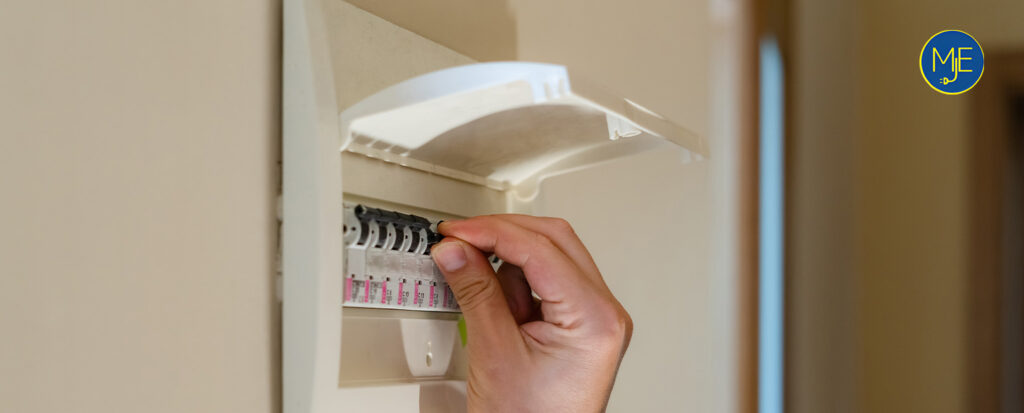
Your switchboard is where your home’s electrical protection lives. It’s also where we often find the biggest differences between “it works” and “it’s safe.”
A proper switchboard safety check is about answering questions like:
- Are your circuits correctly protected from overload and faults?
- Are safety switches (RCDs/RCBOs) installed where they should be?
- Is there evidence of overheating, damage, water ingress, or messy wiring?
- Is the board labelled clearly (a safety issue during faults and emergencies)?
- Can the system handle modern loads without being pushed to its limits?
Switchboards are not DIY territory. Even just having a look can be dangerous if you don’t know what you’re doing. If you’re worried about your switchboard, the safest move is to book an inspection.
If you’re a landlord in Ballarat or you own an investment property, Victoria has electrical minimum standards for rentals. Consumer Affairs Victoria explains that the electrical safety minimum standard commenced on 29 March 2023, requiring rental properties to have a modern-style switchboard with circuit breakers and electrical safety switches installed.
Wiring health checks
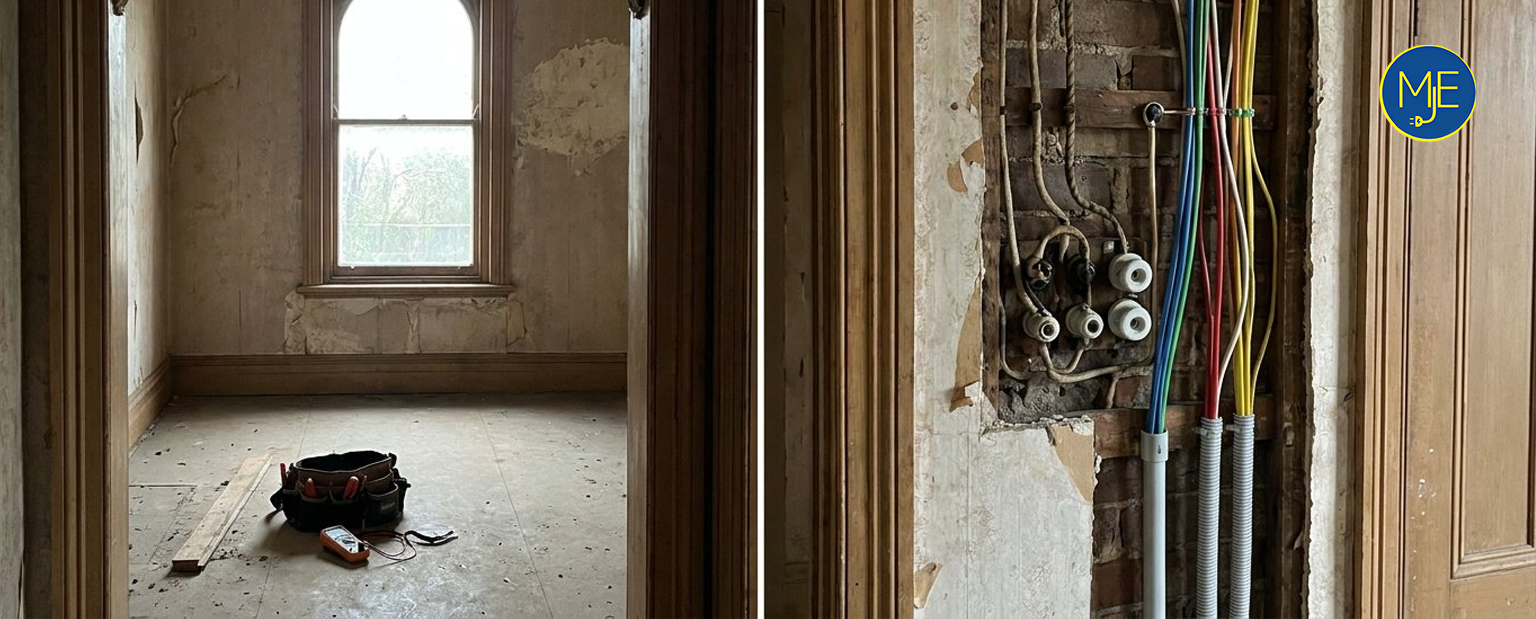
Wiring is one of those things you don’t think about until you really have to. And in areas with older housing and renovations, wiring can be a mixed bag. You might have newer circuits added for a kitchen upgrade, while other sections are still running older cabling and connections.
A licensed electrician can assess wiring conditions where accessible, test circuits, and look for tell-tale issues like poor joins, overloaded circuits, or degraded insulation.
You don’t need to panic about your wiring, but you should consider a professional inspection if you’ve noticed patterns like:
- The lights dim when appliances start
- Ongoing flicker in one area of the house
- Repeated tripping without an obvious cause
- Or you’ve recently moved into a home where you don’t know the electrical history.
This is especially relevant if your home has had “a few hands” over the years. Electrical work should be consistent and compliant, not a patchwork of different standards and approaches.
Powerpoints, switches and lighting
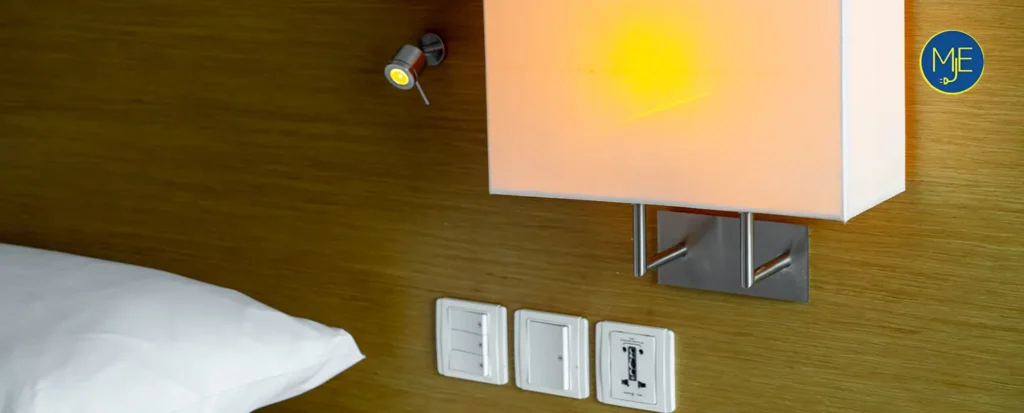
Most electrical hazards we see in homes aren’t dramatic. They’re the everyday components that have quietly loosened, worn, cracked, or overheated over time.
A loose powerpoint can create resistance. Resistance creates heat. Heat is what you don’t want happening inside a wall.
So if you’ve got powerpoints that are wobbly, switches that feel odd, or plates that are cracked or discoloured, it’s worth fixing sooner rather than later.
Lighting is another sneaky one. Flickering lights can be as simple as a poor globe connection, but they can also hint at a failing fitting, overloaded circuit, or a loose neutral connection, especially if it happens in sync with appliances turning on.
Downlights generate heat. If insulation has been installed or moved around them over the years, it’s worth making sure the setup is safe and suitable. Ceiling spaces are where small issues can turn into serious ones because problems are hidden, and ventilation can be poor.
Smoke alarms
Smoke alarms aren’t just a “nice to have”; they’re compulsory in Victorian homes, and they’re one of the simplest life-saving devices you can maintain.
What type of smoke alarm does your home need?
Victorian guidance commonly refers to the build/renovation date:
- Homes constructed before 1 August 1997 can have battery-powered smoke alarms.
- Homes constructed, largely renovated, or extended after 1 August 1997 require smoke alarms connected to 240V mains power with a backup battery.
Smoke alarms must also meet the Australian Standard AS 3786.
Interconnected smoke alarms
In homes constructed or largely renovated after 1 May 2014, where more than one smoke alarm is required, smoke alarms must be interconnected, so if one goes off, they all go off.
The maintenance habit that actually sticks
You don’t need a complicated routine. You just need consistency:
- Test alarms using the test button monthly.
- Keep them clean and dust-free with a quick vacuum around them.
- Replace alarms when they’re old.
If your alarms are hard-wired and you’re not sure what you’ve got or how old they are, a licensed electrician can check type, placement, and condition.
Wet areas and outdoor power
Bathrooms, kitchens, laundries, patios, sheds; these areas get hit with a combo of moisture, heat, dust, and heavy-use appliances. They’re also the places where shortcuts can sneak in, especially in older homes or DIY-heavy sheds.
Rather than listing a hundred rules, here’s the practical mindset: if water, weather, or physical damage could reach the fitting, it needs to be appropriate for the location and in good condition.
Outdoor points should be weatherproof and intact. Bathroom and laundry circuits should be protected appropriately. And if you’ve got an older shed setup that has been “extended over time” with multiple powerboards and leads, it’s worth upgrading properly, especially if you’re running tools, heaters, fridges, or gym equipment.
Surge protection
Surge protection is like a seatbelt for your electronics. You don’t notice it day to day, but it can save you from expensive damage when the power supply gets hit with spikes from storms or network events.
A licensed electrician can talk you through whether whole-home surge protection at the switchboard makes sense for your home, and how it works alongside your existing protection devices. If your household relies on the internet for work or study, or you’ve got expensive appliances and entertainment gear, surge protection is often a smart, quiet investment.
2026 power loads: EV chargers, solar, heat pumps and “everything at once”
Modern homes don’t just use more electricity; they use it simultaneously.
Think about a typical winter evening: heating running, oven on, dishwasher going, hot water system recovering, maybe a dryer, maybe a home office still active, and possibly an EV charging. That’s a very different situation compared to a decade or two ago.
This is where electrical safety overlaps with performance. A home can be “safe-ish” but constantly annoying; tripping circuits, dimming lights, or running too close to capacity.
If you’re adding any major load like an EV charger or new heating/cooling, it’s worth doing a switchboard and circuit review so the system is correctly protected, properly cabled, and realistically sized for how you live now.
Key Victorian requirements for landlords
Landlords don’t just need “a quick once-over.” Victoria has clear expectations for rental safety checks.
Energy Safe Victoria states that rental providers must ensure an electrical safety check of switchboards, wiring and fittings is conducted every two years by a licensed electrician, and that it must be conducted in accordance with AS/NZS 3019:2022 periodic assessment requirements.
On smoke alarms, Consumer Affairs Victoria states that from 25 November 2025, it is mandatory for all rental properties to have annual smoke alarm safety checks to ensure alarms are correctly installed and working.
And as mentioned earlier, rental properties must meet the electrical minimum standard for a modern switchboard with circuit breakers and safety switches.
If you’re a renter reading this, you’re not expected to “fix” these things, but it helps to understand what good safety practice looks like and what you can request.
What to expect from a professional home electrical safety check
A proper safety check should feel calm and structured, not rushed and confusing.
Typically, it looks like:
- a quick chat about what you’ve noticed.
- inspection of the switchboard and protection devices,
- testing of safety switches and circuits as appropriate,
- checks of key fittings around the home
- and a clear summary of what’s urgent, what’s recommended, and what can be planned.
Certificates: what you should receive after electrical work
If electrical installation work is completed, Energy Safe Victoria notes that a Certificate of Electrical Safety (COES) must be issued within 30 calendar days of completion of that work.
It’s a simple but important piece of accountability paperwork, so don’t feel awkward asking for it.
A simple way to prioritise your 2026 safety plan
If you’re wondering where to start, here’s a sensible order that suits most Ballarat homes:
First, do the quick home scan and book help if you notice heat, smells, scorch marks, buzzing, or repeated tripping.
Next, test your safety switch and put a recurring reminder in your phone to do it quarterly.
After that, check your smoke alarms, type, age, placement, and whether interconnection applies to your home.
Then, if your home is older, recently purchased, recently renovated, or you’re adding major loads, like EV charging, book a professional switchboard and circuit assessment.
This approach keeps things simple: deal with obvious hazards first, then bring the “core system” up to a standard that supports how you actually live in 2026.
Safer homes are calmer homes
Electrical safety isn’t about perfection. It’s about reducing risk and keeping your home comfortable, reliable, and protected, especially as households keep adding more high-draw appliances and tech.
If you’d like a hand, MJ Electrical can help with home electrical safety checks in Ballarat, switchboard assessments and upgrades, safety switch testing, smoke alarm checks and upgrades, and planning for modern additions like EV chargers and bigger heating/cooling systems. Get in touch, and we’ll talk you through the safest, most cost-effective next step for your home.