
Key Takeaways
Identify common causes of safety switch tripping, such as faulty appliances or moisture.
Perform basic troubleshooting by unplugging devices and resetting the switch.
Call a licensed electrician for persistent issues or safety concerns.
Key Answer
A safety switch tripping indicates a potential electrical fault. Common causes include faulty appliances, moisture, and damaged wiring. Always address these promptly to maintain home safety.
If your safety switch keeps tripping, you’re not alone. This common electrical issue can be a sign of underlying problems that need attention. Understanding why your safety switch, also known as a Residual Current Device (RCD), keeps tripping is crucial to ensuring your home’s safety. In this guide, we’ll explore the top seven causes of this issue and provide practical solutions to help you manage it safely.
Why Does Your Safety Switch Keep Tripping?
A safety switch is a critical component in your home’s electrical system, designed to protect you from electric shocks by cutting off power when a fault is detected. If your safety switch keeps tripping, it often means there’s a persistent electrical fault somewhere. This could be due to a variety of factors, including overloaded circuits or faulty appliances. Understanding these potential causes is the first step in resolving the issue.
Safety switches, or RCDs, monitor the flow of electricity and quickly shut off the power if they detect a leak. This prevents electric shocks and potential fires. Frequent tripping indicates that something isn’t working as it should, which is why it’s essential to pinpoint the exact cause.
What Should You Do First When Your Safety Switch Trips?
When your safety switch trips, it’s important to stay calm and address the situation methodically. Start by turning off all your appliances and unplugging them from their powerpoints. This will help you identify if a specific appliance is causing the issue.
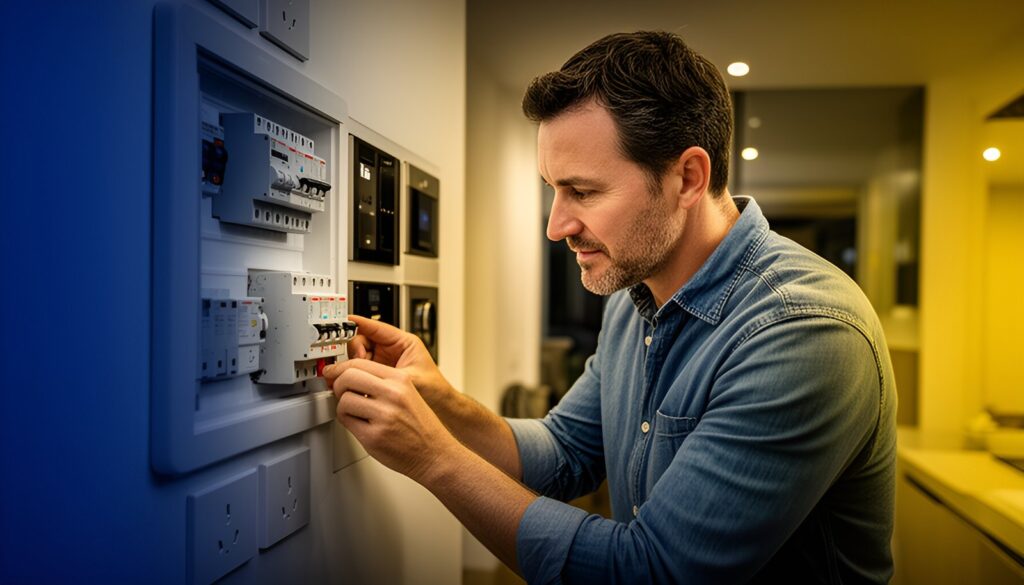
Next, attempt to reset the safety switch by flipping it back to the ‘on’ position on your switchboard. If it stays on, reconnect your appliances one by one, observing which one causes the switch to trip again. This will help you isolate the problematic appliance.
If the safety switch refuses to reset or trips immediately after, it’s best to leave it off and call a licensed electrician to investigate further. This ensures your safety and prevents further electrical hazards.
7 Common Safety Switch Tripping Causes
Understanding why your safety switch keeps tripping requires a closer look at common culprits. Below are the seven typical causes:
Faulty Appliances: Appliances that are malfunctioning or damaged can cause electrical faults. Faulty wiring within an appliance can lead to current leaks, prompting the safety switch to trip. Common offenders include older kitchen appliances or those with visible wear and tear.
Damaged Powerpoints or Leads: Frayed cords and damaged powerpoints are another common cause. This damage can create a path for electricity to leak, triggering the safety switch. Regular inspections of your power outlets and appliance leads can help you catch and fix these issues early.
Moisture: Water and electricity are a dangerous mix. Moisture from leaks or condensation can enter powerpoints or electrical equipment, causing the safety switch to trip. This is especially common in areas like bathrooms or outdoors where water exposure is more likely.
Ageing Wiring: Over time, the wiring in your home can degrade and become less effective at containing electrical current. This degradation can lead to frequent safety switch trips, and it typically requires rewiring by a professional electrician.
Faulty Fixed Appliances: Fixed appliances like hot water systems, stoves, and air conditioning units can develop faults over time. If these are hardwired into your home’s electrical system, they can also cause the safety switch to trip.
Combined Earth Leakage: Sometimes, multiple small leaks in your home’s electrical system can combine to trip the safety switch. This might happen if several appliances are leaking minimal amounts of current that, when combined, exceed the safety switch’s threshold.
Faulty RCDs: Finally, the safety switch itself might be faulty. Over time, even RCDs can degrade or fail, especially if they haven’t been tested regularly.
Why Does Your RCD Trip at Certain Times?
The timing of an RCD trip can often provide clues to its cause. You might notice it trips when certain appliances are in use or during specific weather conditions. For instance, if it trips when using high-power devices like ovens or air conditioners, this could indicate an overloaded circuit.
Weather conditions, like rain or high humidity, can exacerbate moisture-related problems, leading to tripping. If the RCD trips during a storm, this might suggest water ingress or that your system needs protection against power surges.
Identifying patterns can help in diagnosing the issue, but always ensure safety by consulting with a professional if you’re unsure.
Safety Switch Won't Reset? Here's What to Do
If your safety switch won’t reset, it could be due to persistent faults within your system. First, ensure all appliances are unplugged before attempting a reset. If the switch still won’t stay on, it may point to a deeper issue within your home’s wiring.
At this stage, it’s crucial not to force the switch back on repeatedly. This won’t solve the problem and could potentially increase the risk of electrical hazards. Instead, contact a licensed electrician who can perform a thorough inspection and identify the root cause.
Remember, safety switches are there to protect you, so respecting their limits is essential for your safety and peace of mind.
When Should You Call a Licensed Electrician?
While some troubleshooting can be done safely at home, certain situations necessitate the expertise of a licensed electrician. If your safety switch trips frequently and the cause isn’t immediately obvious, or if you notice any of the following, it’s time to call a professional:
Buzzing or crackling sounds from the switchboard. – A burning smell or scorch marks near outlets or on the switchboard. – Flickering lights or power fluctuations. – Electric shocks or tingling sensations when touching appliances.
These signs indicate serious electrical faults that require professional assessment. An electrician can safely diagnose and rectify these problems, ensuring your home is safe and up to code.
How Can You Prevent Safety Switch Problems?
Preventing safety switch issues starts with regular maintenance and testing. Test your safety switches every three months using the built-in test button. This ensures they’re functioning correctly and can respond in an emergency.
Additionally, conduct regular visual inspections of your appliances and powerpoints. Look for visible damage or wear that could cause problems. Consider scheduling an annual electrical inspection to catch potential issues early and maintain your home’s safety.
By staying proactive, you can minimise the risk of electrical faults and enjoy peace of mind knowing your safety switches are ready when needed. For more tips, check out our guide on What is a Safety Switch? Essential Electrical Safety Tips.
Safety Switch Keeps Tripping? Get Professional Help
Dealing with a safety switch that keeps tripping can be frustrating, but understanding the underlying causes can help you address the problem effectively. While some causes are simple fixes, others require professional attention to ensure your home’s electrical safety.
If you’re experiencing persistent issues, don’t hesitate tocontact MJ Electrical & Solarfor a comprehensive inspection and quote. Ensuring your electrical systems are in top shape is crucial, and expert help is just a call away.
Frequently Asked Questions
Common causes include faulty appliances, damaged powerpoints or leads, moisture ingress, ageing wiring, and faulty RCDs.
Use the test button on the switch. If it trips, it’s working. Reset it by flipping it back on.
Call a licensed electrician if the switch won’t reset, trips frequently, or if you notice signs of serious electrical faults.
This could be due to moisture or a surge. Disconnect appliances and call an electrician to inspect for any storm-related damage.
You can perform basic checks, but for persistent issues or complex problems, it’s best to hire a professional.