Winter in Ballarat can be beautiful, but let’s be honest; it can also be freezing.
Once the cold weather arrives, most homes start using a lot more electricity. Heaters are switched on, electric blankets come out of storage, clothes dryers run more often, lights stay on longer, and hot water systems work harder.
That is why winter electrical safety is so important. Your home’s electrical system may seem fine during the warmer months, but winter can put extra pressure on your wiring, switchboard, power points, and appliances.
The good news? A few simple checks before winter can make your home safer, more comfortable, and less likely to run into electrical problems when you need everything working properly.
Here is a simple guide to help you prepare your home electrical system before winter in Ballarat.
1. Book an Electrical Safety Inspection Before Winter
One of the best things you can do before winter is book an electrical safety inspection.
Think of it like a health check for your home. A licensed electrician can look over your electrical system and spot problems before they become bigger, more expensive, or more dangerous.
During an inspection, an electrician may check your:
- Switchboard
- Safety switches
- Power points
- Lighting
- Wiring
- Smoke alarms
- Outdoor power points
- Heating circuits
- Signs of overheating or damage
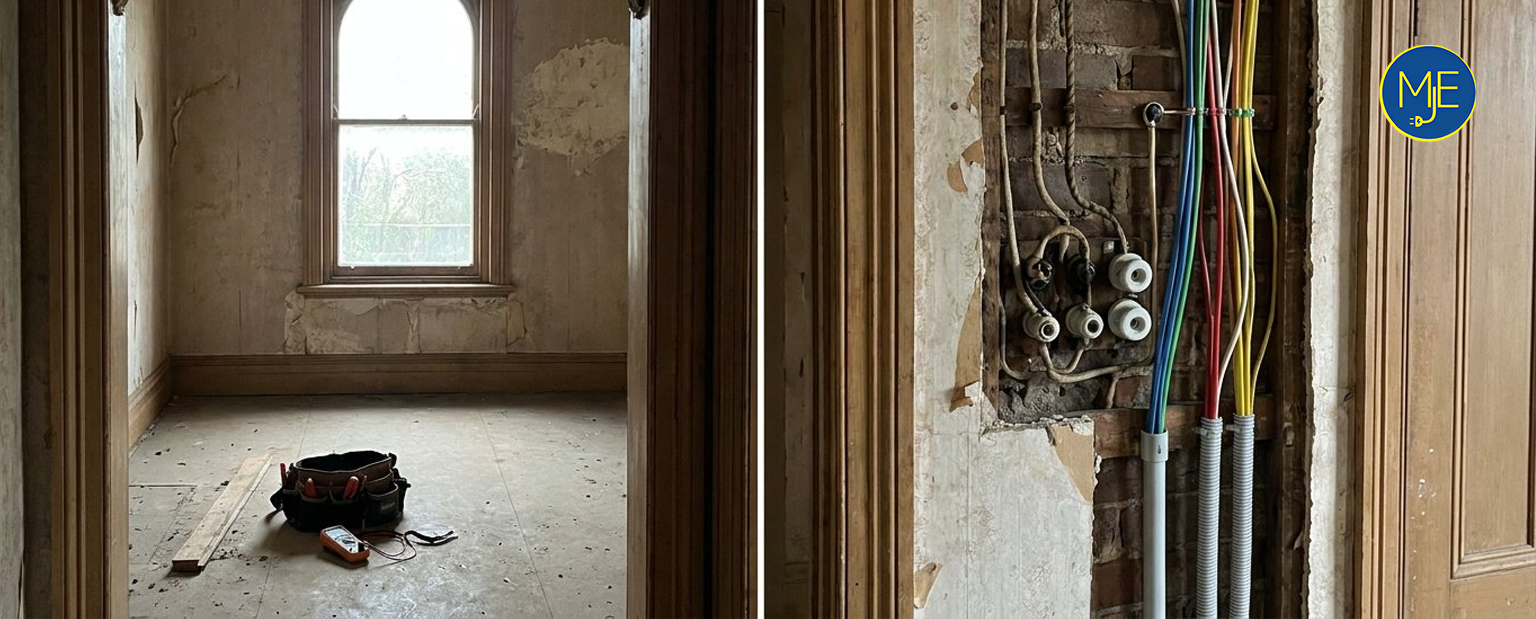
This is especially important if your home is older, has had renovations, or you are not sure when the electrical system was last checked.
You should also book an inspection if you have noticed things like flickering lights, warm power points, burning smells, buzzing switches, or power that trips often.
These signs should not be ignored. They can point to loose wiring, overloaded circuits, faulty appliances, or switchboard issues.
A quick visit from a licensed Ballarat electrician before winter can give you real peace of mind.
2. Check Your Switchboard
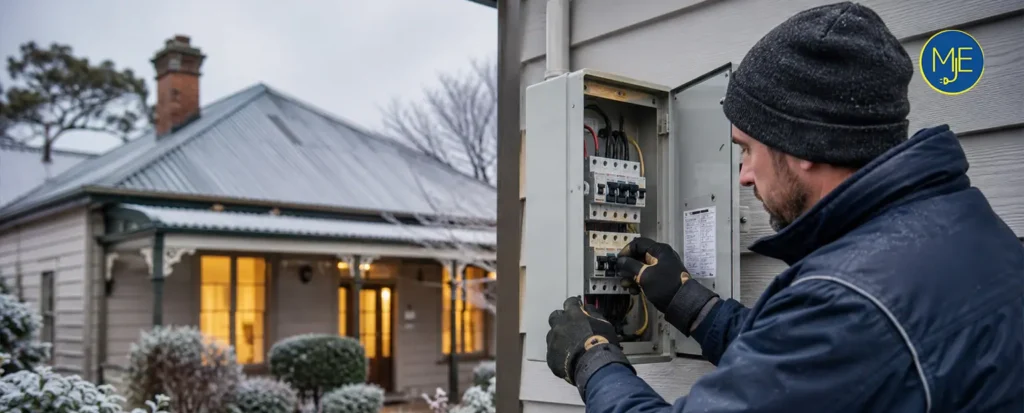
Your switchboard is the main control point for your home’s electricity. In winter, it often has to work harder because more appliances are being used at the same time.
For example, you may have a heater running in the lounge, the dryer going in the laundry, the kettle boiling in the kitchen, and lights on throughout the house. That is a lot of demand.
Your switchboard should be safe, modern, and easy to understand. If it is old, damaged, or still using ceramic fuses, it may be time to have it checked.
Warning signs of switchboard problems include:
- Power tripping often
- A burning smell near the switchboard
- Buzzing or crackling sounds
- Old ceramic fuses
- No safety switches
- Heat marks or discolouration
- Circuits that are not labelled
If your power keeps tripping when you turn on a heater or dryer, do not keep resetting it and hoping for the best. Your electrical system is trying to tell you something.
A licensed electrician can check whether the circuit is overloaded, whether an appliance is faulty, or whether your switchboard needs upgrading.
3. Test Your Safety Switches
Safety switches are designed to help protect people from electric shock. They quickly shut off power when they detect a fault.
Before winter, it is a good idea to test your safety switches.
Most safety switches have a small test button marked “T” or “Test”. When you press it, the switch should trip and turn the power off to that circuit. You can then switch it back on.
Before testing, let everyone in the home know because the power may briefly go off. It is also smart to save any computer work first.
If the safety switch does not trip, will not turn back on, or keeps tripping again and again, call a licensed electrician.
This is an important part of home electrical maintenance, especially before the colder months when your home uses more power.
4. Use Heaters Safely
Heaters are one of the biggest winter electrical safety concerns.
Portable heaters are handy, but they also use a lot of power. If they are used the wrong way, they can become a fire risk.
For better heating electrical safety, always plug portable heaters directly into a wall power point where possible.
Avoid plugging heaters into:
- Power boards
- Double adaptors
- Cheap extension leads
- Overloaded outlets
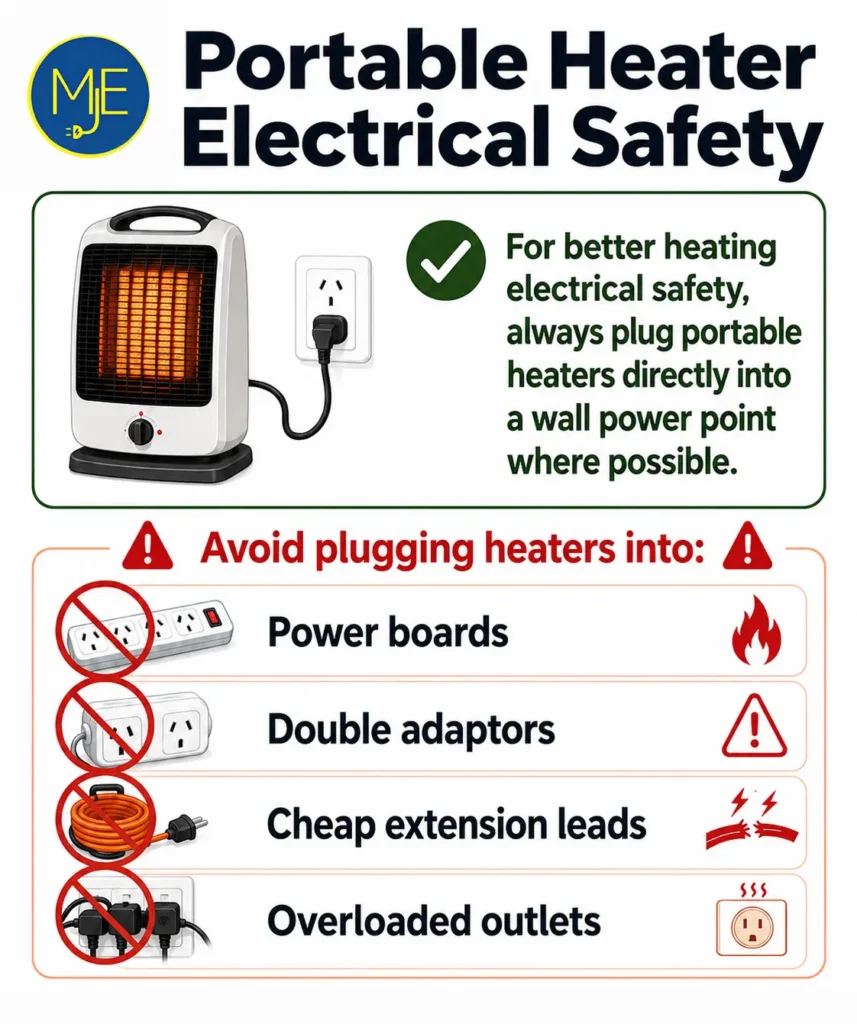
Heaters should also be kept well away from curtains, bedding, clothes, rugs, lounges, and furniture.
Before using a heater that has been stored away, check the cord and plug. Look for cracking, fraying, burn marks, or loose connections.
Stop using the heater if:
- It smells like burning
- The plug gets hot
- The power point feels warm
- It makes buzzing sounds
- It trips the power
- The cord looks damaged
Never leave portable heaters running when you leave the house or go to sleep. It only takes one fault or one item too close to the heater for things to become dangerous.
5. Check Electric Blankets Before Using Them
There is nothing better than getting into a warm bed on a cold Ballarat night. But electric blankets need to be checked carefully before use.
If your electric blanket has been packed away since last winter, unfold it fully and inspect it before putting it on the bed.
Look for:
- Frayed cords
- Damaged plugs
- Cracks in the controller
- Scorch marks
- Exposed wires
- Uneven heating
- Lumps, bends, or kinks
If anything looks wrong, do not use it.
It is also best not to sleep with an electric blanket on all night unless the manufacturer says it is designed for overnight use. A safer habit is to turn it on before bed, warm the bed, and switch it off before going to sleep.
Never fold an electric blanket while it is switched on, and avoid placing heavy items on top of it. This can damage the internal wiring.
6. Be Careful With Clothes Dryers
In Ballarat winter, drying clothes outside is not always easy. That means the clothes dryer often gets used a lot more.
Dryers are useful, but they need regular care.
Before winter, make sure you:
- Clean the lint filter after every use
- Check that vents are not blocked
- Avoid overloading the dryer
- Keep the area around the dryer clear
- Do not run it while you are asleep or out of the house
Lint build-up can become a fire risk. A dryer that is packed too full can also overheat or work harder than it should.
If your dryer smells hot, makes unusual sounds, or trips the power, stop using it and get it checked.
Sometimes the problem is with the appliance. Other times, it may be the circuit or power point.
7. Look for Warning Signs Around Your Home
You do not need to be an electrician to notice when something seems off.
Before winter, walk through your home and look for simple warning signs.
Call an electrician if you notice:
- Flickering lights
- Lights dimming when appliances turn on
- Buzzing switches
- Warm or hot power points
- Brown marks around outlets
- Cracked power points
- Loose switches
- Sparks when plugging something in
- Burning smells
- Power that trips often
- Small shocks or tingles from appliances
These signs can mean there is a problem with wiring, fittings, circuits, or appliances.
Do not try to fix electrical issues yourself. DIY electrical work is dangerous and can put your home and family at risk.
A licensed Ballarat electrician can find the cause safely and repair it properly.
8. Check Outdoor Power Points, Garages and Sheds
Outdoor electrical areas are easy to forget, but they matter in winter.
Cold, rain, frost, and moisture can all affect outdoor power points, lights, sheds, garages, pumps, and garden electrical systems.
Before winter, check:
- Outdoor power points
- Security lights
- Sensor lights
- Shed wiring
- Garage power points
- Garden lighting
- Extension leads used outside
- Weatherproof covers
Outdoor fittings should be secure, dry, and designed for outdoor use.
If you see cracked covers, exposed cables, loose fittings, or water getting into an electrical point, have it checked as soon as possible.
Garages and sheds are also worth checking, especially if you use them for tools, freezers, battery chargers, or portable heaters.
9. Test Your Smoke Alarms
Smoke alarms are a simple but very important part of winter safety.
Before winter, test every smoke alarm in your home. Make sure the alarm sounds properly and can be heard from sleeping areas.
Also check whether batteries need replacing and whether the alarm is expired. Smoke alarms do not last forever, so check the date on the unit if you are unsure.
Dust can also affect smoke alarms, so give them a gentle clean if needed.
With heaters, dryers, electric blankets, and other winter appliances being used more often, working smoke alarms are essential.
10. Avoid Overloading Power Points
Winter often means more devices plugged in at once.
It can be tempting to plug a heater, lamp, phone charger, laptop, and other items into one power board. But overloaded power points and power boards can overheat.
As a general rule, high-power appliances should have their own wall outlet.
This includes:
- Portable heaters
- Clothes dryers
- Washing machines
- Kettles
- Microwaves
- Large kitchen appliances
Power boards should only be used for lighter items, and they should never be overloaded.
If you are always running out of power points, it may be time to have extra outlets installed by a licensed electrician. It is much safer than relying on extension leads and adaptors all winter.
11. Know When to Call a Ballarat Electrician
Some winter checks are simple, like cleaning the dryer lint filter or testing a smoke alarm.
But anything involving wiring, switchboards, power points, safety switches, or electrical repairs should always be handled by a licensed electrician.
Call an electrician if:
- Your safety switch does not test properly
- Power trips when heaters are used
- Your switchboard is old
- You still have ceramic fuses
- Power points feel warm
- Lights flicker often
- You smell burning
- You hear buzzing from switches or outlets
- Outdoor power points are damaged
- You need more power points installed
- You are adding new heating or large appliances
Electrical issues rarely fix themselves. In most cases, they get worse over time.
Getting help early can make your home safer and may prevent bigger problems during the coldest part of winter.
Get Your Home Winter-Ready With MJE Ballarat
Before Ballarat’s cold weather really sets in, it is worth making sure your home electrical system is safe, reliable, and ready for the extra winter demand.
MJE Ballarat can help with electrical safety inspections, switchboard checks, safety switch testing, power point repairs, heating-related electrical work, outdoor electrical checks, and general home electrical maintenance.
Whether you are worried about tripping power, old wiring, heater safety, or simply want peace of mind before winter, the team at MJE Ballarat can inspect your home and provide practical advice.
Do not wait until a freezing night to find out something is wrong.
Book a winter electrical safety check with MJE Ballarat today and make sure your home is ready for the colder months ahead.